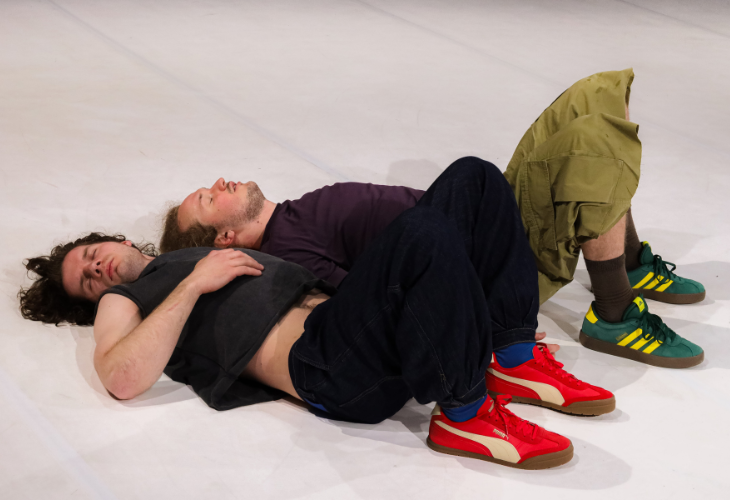
The 17th season of Theatre on Gertrude Street was marked by three premieres: Jana Jacuka’s performance HA, which explores the performativity of laughter as a mechanism of escape; the contemporary chamber opera Cantus Firmus by Barbara Lehtna, Linda Krūmiņa and Līva Blūma; and Andrejs Jarovojs’ movement performance The One Who Stands May Fall (Stāv kas krīt). In different ways, these new works addressed questions of communication, power, boundaries, and humanity’s relationship with the surrounding world.
Seasonal Highlights
One of the season’s standout events was the return to the stage—and to the international circuit—of The Wood Paths (Malkas ceļi), which originally premiered during the pandemic. Together with the Latvian Puppet Theatre, the production represented a Baltic focus at one of Europe’s largest visual theatre festivals, the Festival Mondial des Thé?tres de Marionnettes (FMTM) in Charleville-Mézi?res. The performance also appeared at Manipulate Arts Festival in Edinburgh, a festival that has been shaping the development of object and puppet theatre in Scotland and internationally for more than forty years.
The journey of The Wood Paths will continue next season with performances opening the Lutke International Contemporary Puppet Arts Biennial in Slovenia, as well as a tour across the Atlantic to Canada.
This was also an especially successful season for choreographer Jana Jacuka. Her performance HA, which premiered in Latvia at Ģertrūdes Street Theatre, received several international awards, including recognition at the Amsterdam Fringe Festival and Riga Art Week, and continues to tour festivals across Europe.
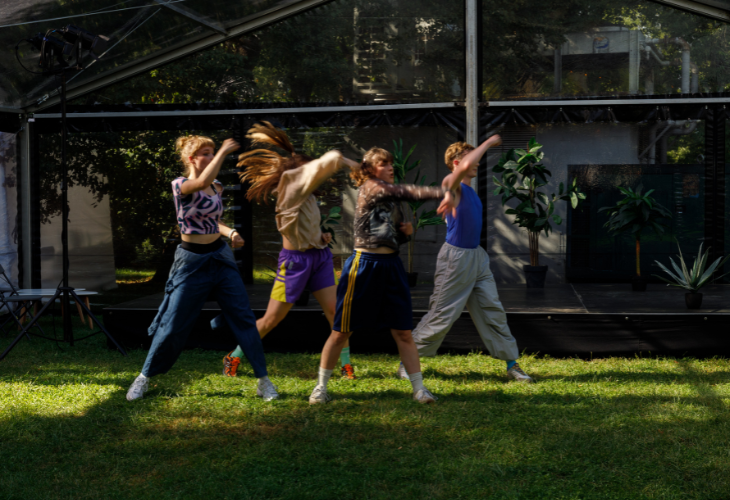
Throughout the season, Theatre on Gertrude Street remained committed to supporting emerging performing artists entering the professional field. In May, audiences had the opportunity to experience graduation productions by Master’s students from the Art Academy of Latvia and the Latvian Academy of Culture: director and set designer Agnese Malnača’s Celebration (Svētki) and choreographer Eva Krūmiņa’s Virginia (Virgīnija). These productions continued a longstanding tradition through which many of today’s active theatre-makers created their first professional works within the theatre’s walls.
Seeking new ways to support artists, the theatre launched its first Sprint Residencies, offering artists the opportunity to develop creative ideas over the course of a single intensive day and receive feedback from the theatre team. The response exceeded expectations, with a large number of applications received. Three creative teams—led by Mārcis Broks, Rēzija Terēze Dubulta, and Patrīcija M. Keiša—were selected to develop their projects at the theatre. Artistic Director Andrejs Jarovojs noted that “these sprint residencies confirmed the importance of opening the theatre to artists we have not yet collaborated with and giving them space to develop their ideas. It was a valuable and enriching experience for everyone involved.”
Touring in Latvia and International Collaboration
The 17th season was one of the most internationally active in the theatre’s history. Productions including Voluntary Slavery (Brīvprātīgā verdzība), HA, and The Wood Paths toured to Amsterdam, Utrecht, Rotterdam, Edinburgh, Charleville-Mézi?res, Lausanne, Turin, and Vilnius, further strengthening the presence of contemporary Latvian performing arts within the European cultural landscape.
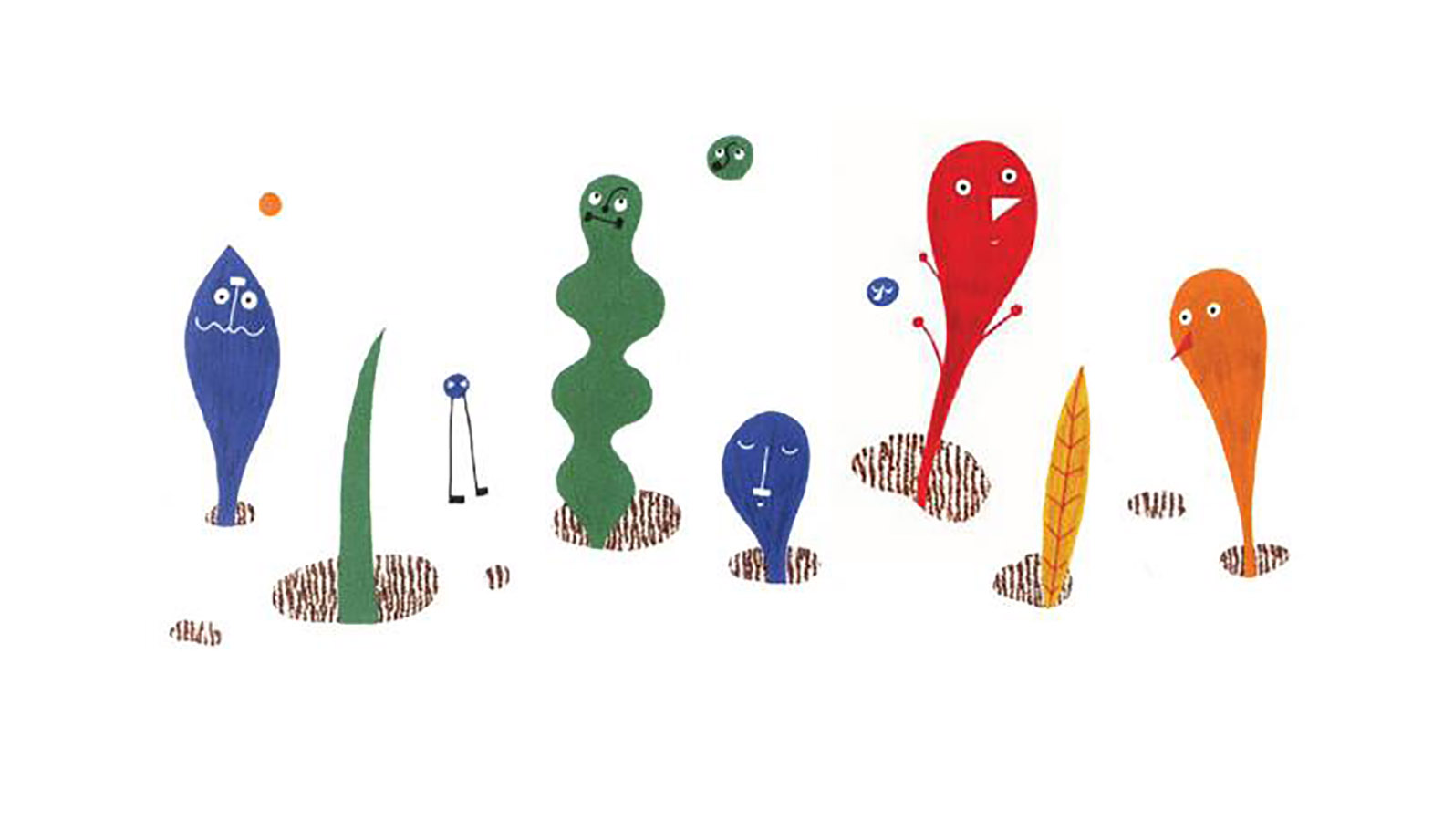
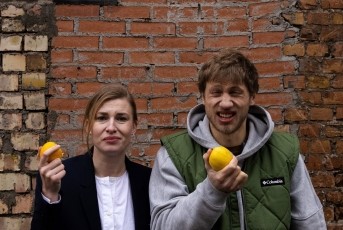
Equally important to us are encounters with audiences beyond Riga. This season, productions such as Seasons. Faux Pas, Sam Steiner’s Lemons Lemons Lemons Lemons Lemons, and Voluntary Slavery were presented in Valmiera, Rēzekne, Daugavpils, Jaunolaine, and Rundāle.
The season’s most significant regional event was Theatre Festival #5, organised together with Dirty Deal Teatro, Daugavpils Theatre, and the Latvian Puppet Theatre. For the third consecutive year, the festival brought together Latvian and international artists, audiences, and theatre professionals in Daugavpils. Alongside performances, the programme included audience talks, professional discussions, readings, and practical workshops, once again confirming Daugavpils as an important meeting point on the map of Latvian and European theatre. The festival’s motto remains unchanged: “Latgale is close.”
This season, Ģertrūdes Street Theatre continued to serve as a platform for introducing audiences to the work of independent theatres and artists from abroad. In October, the theatre hosted What Will Happen When We Are No Longer Here?, directed by Kirill Havansky of Tartu New Theatre. In November, audiences experienced the France-based musical performance Perdre le Nord, produced by Katlz.Riga. February brought a guest performance by British company Theatre West with Hand in Hand with Angels, while in March audiences saw Cain, directed by Bulgarian theatre-maker Desislava Boeva.
Collaboration remained one of the theatre’s cornerstones throughout the season. Together with Istabas Teātris, Katlz.Riga, Riga Stand Up, and Comedy Latvia, we continued to create a diverse programme of events.
Over the course of the season, we organised, hosted, and supported more than 100 events, attracting over 10,000 visitors. We are grateful both to our loyal audiences who return again and again, and to those who open the doors of Ģertrūdes Street Theatre for the very first time.